
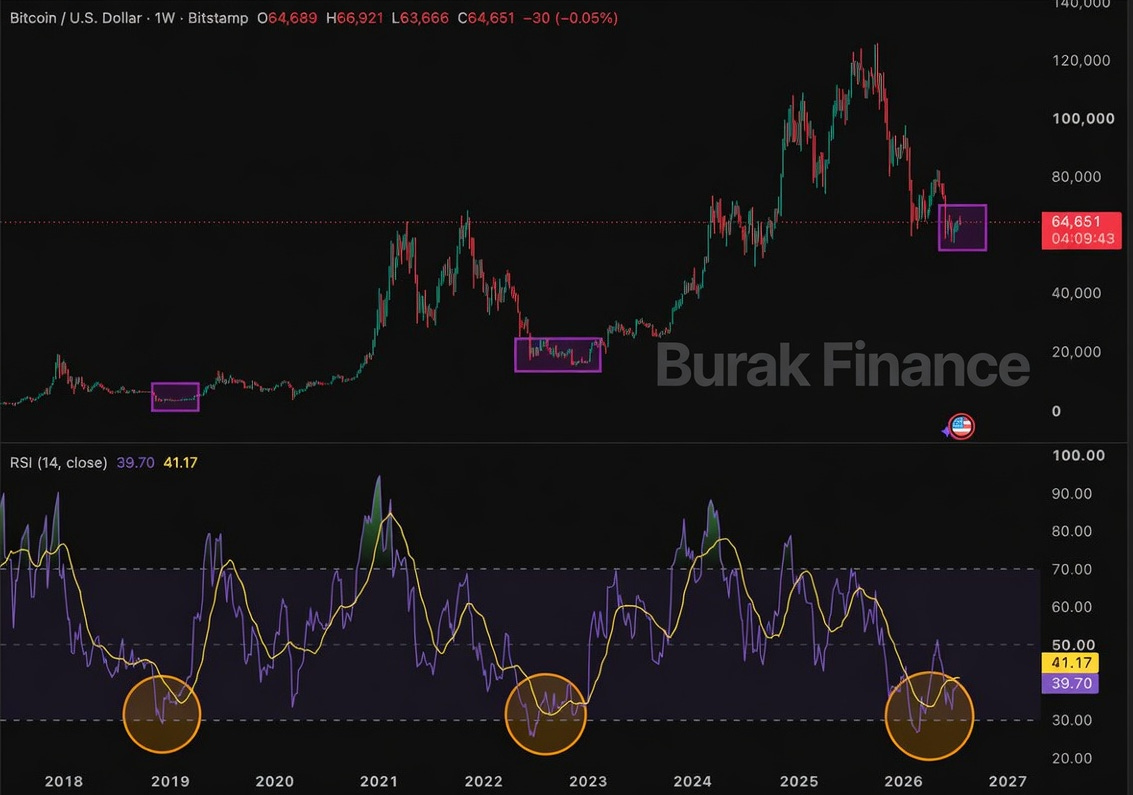
I’ve been staring at this weekly Bitcoin chart for days.
The same RSI condition that showed up near the 2019 bottom and again near the 2022 bottom just printed for the third time. Price is sitting around 64,650. RSI is hovering near 39 after dipping lower. The structure looks familiar in a way that makes me pay attention.
At the same time, we have fresh institutional capital flowing into the crypto complex, regulatory clarity advancing in Washington, and an emerging structural demand driver that most charts completely ignore: AI agents that need programmable money.
This is not a call that the exact bottom is in today. It is a clear-eyed look at why the current zone offers limited downside relative to the upside if the historical pattern and the new catalysts play out.
This is the kind of setup that has worked for me before. The approach that got my portfolio past 240% in the last 2 Years was never about predicting exact bottoms. It was about waiting until a few independent things lined up and then sizing for the asymmetry. That same process has let me outperform the broader markets by a huge margin.
Reason 1: The Weekly RSI Pattern
Look at the weekly
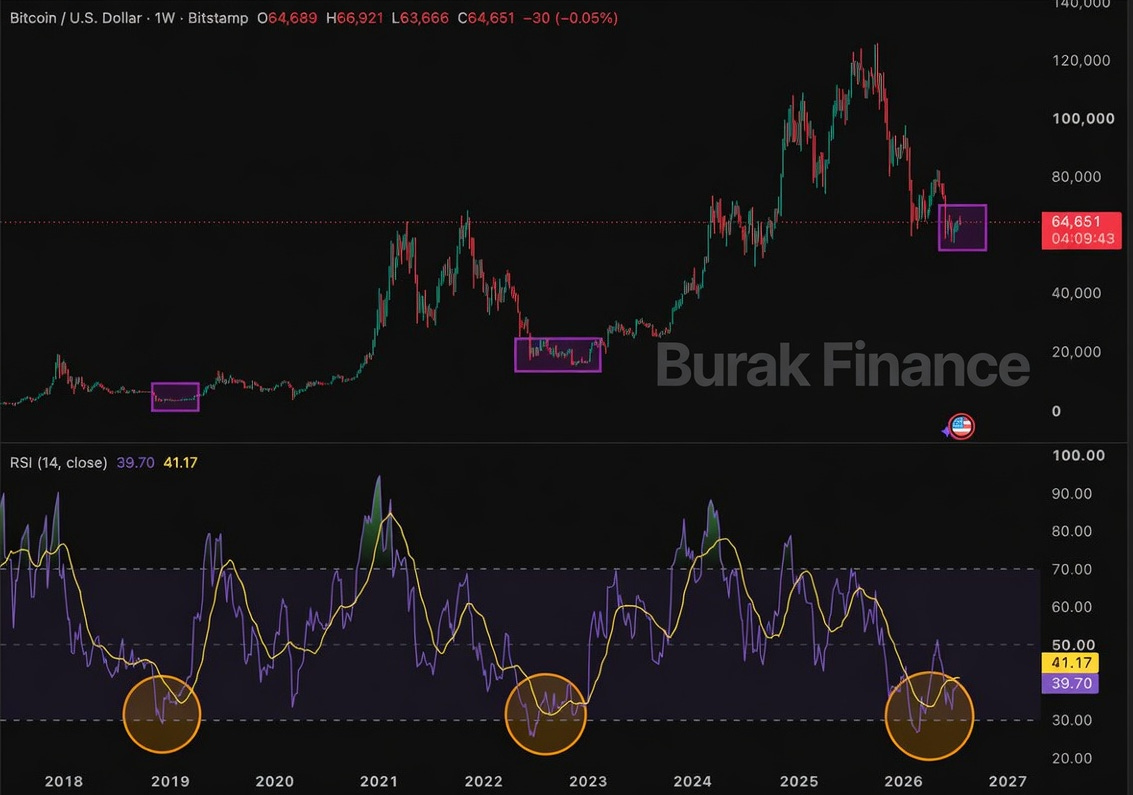
In late 2018 into early 2019, weekly RSI dropped into the low 30s. Price bottomed and the next major advance began.
In 2022, after the FTX collapse, the same RSI zone was tagged. The low formed and the multi-year rally followed.
Today RSI sits near 39–41 after dipping lower. Price is consolidating near $64,650 inside a range that looks structurally similar to the previous two boxed zones.
Three clear historical instances of the same high-timeframe condition. Markets are never identical, but this is the kind of repeatable technical observation I refuse to ignore.
Reason 2: Citadel Securities Just Wrote a $400 Million Check

On July 16, Citadel Securities invested $400 million in Crypto.com at a $20 billion valuation. It is the first institutional funding round in the company’s long history. The capital is earmarked for expansion into tokenized securities and derivatives.
Citadel is not a retail-facing venture firm. They are one of the most sophisticated market makers in the world. When they put this size of capital into crypto infrastructure, it is a signal that structural demand is expected to grow. Follow the money!
Reason 3: Institutions Are Still Accumulating Coinbase Heavily
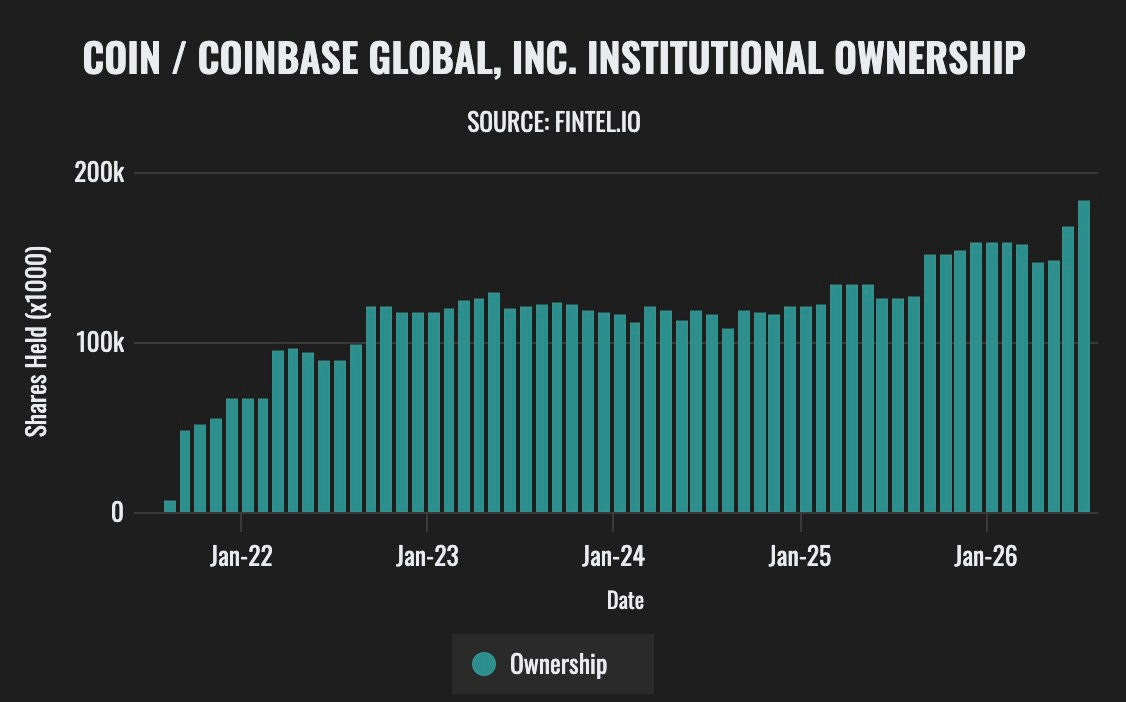
Coinbase remains the primary publicly traded proxy for institutional crypto exposure. Recent 13F activity and ownership data show continued buying even through the drawdown. Specific large increases (one notable firm raised its stake by over 600% in the first quarter) and overall institutional ownership remaining high tell the same story the surveys have been showing all year: sophisticated capital is using volatility to add. Not to exit.
Again, follow the big money!
Reason 4: The Clarity Act Is Advancing
Regulatory progress is also moving, slowly but in the right direction. The Clarity Act passed the House last year. Senate Banking advanced it in May, and it hit the Senate calendar in June. It’s still waiting on a full floor vote, but the direction is clearer than it’s been in a long time. That kind of uncertainty has been a real overhang for bigger capital. Any real progress removes friction.
And then there’s the one that feels under-discussed.
Reason 5: AI Agents Will Need Crypto

This is the catalyst most people are still underweighting.
AI agents cannot open traditional bank accounts. They have no human identity, no KYC profile, and no credit score. Yet they will need to hold value and make transactions.
The emerging solution is crypto-native. Stablecoins (especially USDC) are already becoming the default for high-frequency micropayments and agent-to-agent settlement because they are programmable, settle in seconds, and cost fractions of a cent. Bitcoin is increasingly discussed as the preferred store of value and treasury asset for those same agents.
Multiple 2026 studies of frontier AI models show a strong revealed preference for Bitcoin as a long-term holding and stablecoins for everyday transactions. Infrastructure is already being built (Coinbase, Stripe, Visa and others are racing to support agent payments). This is not science fiction. It is an early but real demand driver that did not exist in previous cycles.
To be honest, if AI agents scale the way the technology suggests, they will need money that works without banks. That money is far more likely to be Bitcoin and stablecoins than traditional fiat.
Reason 6: Terrible Sentiment
You can feel it across timelines, group chats, and comment sections. The tone is exhausted, dismissive, and in many cases outright hostile toward anything crypto. People who were loud during the last run-up are quiet. Funding rates, social volume, and general mood all point to the same place. Most participants have already given up or are waiting for lower prices that may never come. Extreme negative sentiment has shown up near every major bottom I’ve paid attention to. It doesn’t guarantee the low is in, but it is rarely present at the top.

Putting the Pieces Together
Technical pattern that marked the last two major lows.
Real capital from one of the world’s top market makers.
Continued institutional buying of the leading regulated proxy.
Regulatory clarity moving through Congress.
A new structural buyer class (AI agents) that prefers crypto-native money.
I talk about these kinds of setups actively with the people who are in the chat. If you want to be part of those conversations instead of just reading the finished notes, join the chat. That’s where the real-time thinking happens.

Next Steps
Keep the weekly Bitcoin chart with RSI (14) open and mark the three historical lows yourself.
Watch Coinbase institutional ownership updates and any further large 13F increases as a flow proxy.
Track the Clarity Act Senate calendar. A floor vote would be a meaningful sentiment and capital catalyst.
Monitor early metrics on AI agent transaction volume and wallet infrastructure. The preference data is already there; volume will tell us the speed.
Size any exposure according to your own risk rules so that a failed pattern does not damage the broader portfolio.
If you want the full picture, join the paid side.
Here’s what you get:
The complete portfolio
Live position sizing on setups like this one
The exact risk rules behind the 240%, large outperformance versus the market
Ongoing updates as things develop
Right now a paid subscription still costs about the same as a burger.
That price will not last.
Anyone who joins today, locks in the current rate forever.
Once it goes up, the old price is gone.
The free posts will keep giving you the big picture.
The paid side is where you see the actual book.